







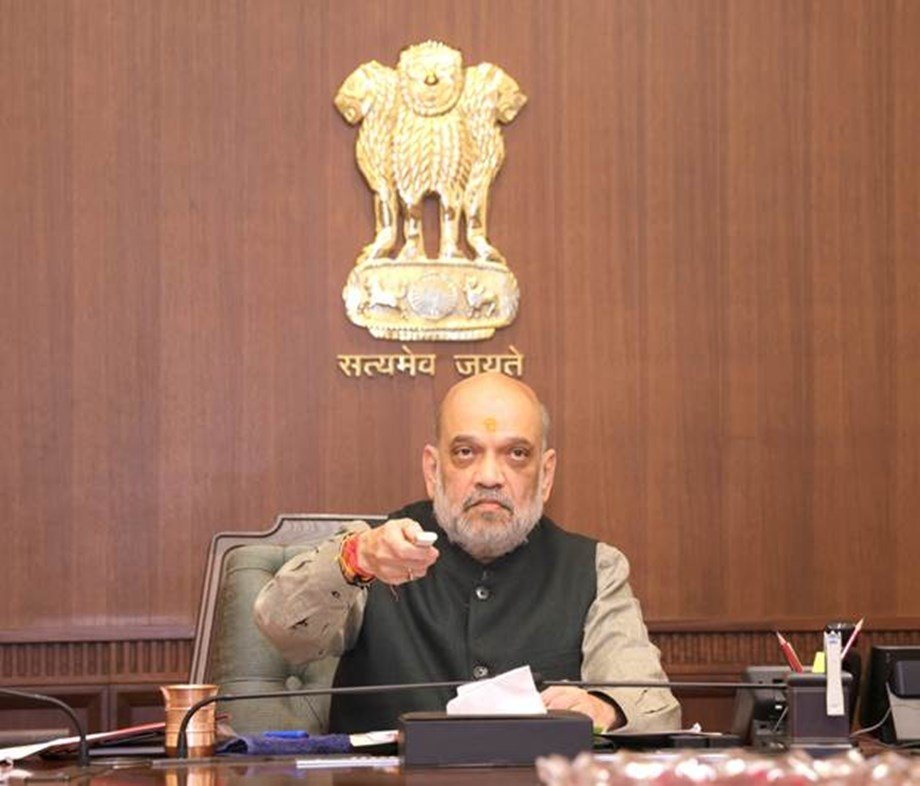
Union Home and Cooperation Minister Shri Amit Shah addressed a major Cooperative Conference organised by KRIBHCO in Panchkula, Haryana, centred on the theme “Role of Cooperation in Sustainable Agriculture.” The event saw the participation of Haryana Chief Minister Shri Nayab Singh Saini, Union Minister of State for Cooperation Shri Krishan Pal Gurjar, senior officials including Dr. Ashish Kumar Bhutani, and several dignitaries.
Haryana Leading a New Era of Prosperity Through Agriculture–Cooperative Synergy
Shri Amit Shah lauded Haryana for its historic and cultural heritage while highlighting its modern contribution to agricultural growth. He stated that the state is “writing new dimensions of farmers’ prosperity” by leveraging the strong partnership between agriculture and cooperatives.
Marking the International Year of Cooperatives, the Minister inaugurated multiple initiatives, including a milk chilling centre, HAFED flour mill, issuance of RuPay Platinum Cards, registration certificates for model PACS, and a dedicated online portal for the occasion.
Cooperation as the Engine of Employment and Rural Growth
Shah emphasised that with 70% of India’s population living in rural areas, agriculture and animal husbandry remain the backbone of the livelihood system. When combined with cooperation, these sectors not only generate employment but also drive prosperity for 125 crore people.
Illustrating the power of cooperative economics, he shared the example of Amul, which now distributes approximately ₹90,000 crore annually to 36 lakh women milk producers—far above what traditional market pricing would deliver. This, he said, demonstrates why the mantra “Prosperity through Cooperation” is central to Prime Minister Narendra Modi’s vision.
Strengthening Agriculture Through Sustainable Practices
Shri Shah outlined the core foundations of the government’s new agriculture policy:
-
Scientific irrigation to achieve more yield with less water
-
Natural farming to reduce chemical dependency
-
Soil testing to guide low-risk, high-productivity crop choices
-
Soil health, water conservation, and climate resilience as pillars of agricultural reform
He stressed that farmers’ income must grow through better credit access, market linkages, processing, packaging, and value-added marketing. To achieve sustainable farming, agriculture must gradually move beyond subsidies toward long-term, sustainable profit models.
Expanding Investment in Rural and Agricultural Development
The Minister highlighted the significant expansion of budgetary allocations under the Modi government:
-
Agriculture budget increased from ₹22,000 crore (2014) to ₹1,27,000 crore
-
Rural development budget increased from ₹80,000 crore to ₹1,87,000 crore
He noted improved crop insurance, the ₹6,000 annual support through PM-Kisan, and the ₹1 lakh crore Agriculture Infrastructure Fund as transformative measures. Farmers are gaining improved price realisation through e-NAM, while missions such as Shri Anna, Pulses & Oilseeds, and the circular dairy ecosystem continue to strengthen the agriculture landscape.
Strengthening PACS and Creating New National Cooperative Institutions
Shri Amit Shah highlighted reforms in Primary Agricultural Credit Societies (PACS), where model by-laws have enabled PACS to expand into:
-
Fertiliser and pesticide distribution
-
Cleaning, grading, and marketing of produce
-
Medical shops, petrol pumps, gas agencies
-
Water distribution and other services
Nearly 30 activities have been integrated with PACS to enhance their role.
He also emphasised the establishment of three major multi-state cooperative societies:
-
NCEL – Exporting farmers’ produce
-
NCOL – Marketing and certifying organic products
-
BBSSL – Seed production and distribution
These steps, he said, lay a solid foundation for increasing farmers’ income nationwide.
Amul’s Success and the Future of Large-Scale Cooperatives
From collecting just 2,000 litres of milk per day at inception, Amul today collects nearly 3 crore litres daily and has a turnover of ₹1,23,000 crore. Shah expressed confidence that within 15 years, India will have at least 20 cooperative giants like Amul, each playing a vital role in rural prosperity.
He also praised Haryana for offering the highest sugarcane procurement prices and for significantly contributing to agricultural and livestock-based wealth creation.
‘Bharat Taxi’: A Cooperative Model for Driver Prosperity
Shri Shah announced that the Ministry of Cooperation will soon launch ‘Bharat Taxi’, a cooperative taxi platform where all profits will go directly to drivers. Drivers will receive insurance, and advertising opportunities will enhance their income. He projected that Bharat Taxi will become the leading taxi service in India, showcasing how cooperation can transform livelihoods beyond agriculture.
Haryana’s Legacy: Food Security, Defence, and Sporting Excellence
Concluding his address, Shah praised Haryana for its outsized contribution to:
-
Food security
-
Milk production
-
National defence
-
Sports excellence
He recalled the era when India relied on wheat imports and credited Haryana and Punjab for making India self-reliant in food grains, securing global recognition. Haryana’s farmers, soldiers, and sportspersons, he said, continue to uphold the honour of the nation across fields—from the battlefield to global sports arenas.