




New Delhi9 hours agoAuthor: Saket Anand
You must have travelled by booking a cab through Ola, Uber or Rapido.
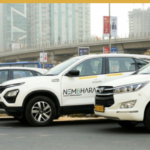
On 5 February, India’s first co-operative cab service, the Bharat Taxi app, was launched in Delhi. The entire fare will go to the driver because this is not a company’s app, nor will any individual or company have ownership rights. The drivers are the owners here.
The fare is affordable. It is also claimed that fares will not increase during rain or peak hours.
To verify these claims and test the services, Dainik Bhaskar’s team in Delhi downloaded the Bharat Taxi app.
The fare was found to be lower compared to other cabs. For the same location, its fare was ₹14–15 less compared to Uber. And compared to Ola, it showed about ₹138 less.
To check the services, we booked a cab on 7 February. After booking, the waiting time was initially seven minutes, then it gradually increased to 12–13 minutes.
The booking was confirmed twice, but the cab did not arrive. Eventually, both rides were cancelled.
After this, to understand the reason for not getting a cab and to understand the Bharat Taxi app experience, we met with some drivers.

Union Cooperation Minister Amit Shah officially launched Bharat Taxi App on 5 February.
Drivers say – getting rides, but rates are poor
Shivraj Singh is from Bulandshahr. He has been driving cabs for the last 10 years. He installed the Bharat Taxi app 25 days ago but is not taking rides due to not getting proper rates.
Shivraj says, “I have taken only one ride so far. The time factor has not been considered. Payment should be based not just on kilometres, but also on how much time it takes to reach a place. If the distance is less but it takes more time due to traffic jams, more CNG is consumed. I keep the Bharat Taxi app open, but it pays less compared to other apps.”
“The rides are mostly available in areas where drivers do not want to go, or in areas with heavy traffic and crowds. If this app succeeds and damages other companies’ market share, we fear being turned into bonded labourers. They might make us drive taxis at arbitrary rates, because they are not giving us proper rates even now.”
When asked about other cab companies, Shivraj says, “The companies that are currently operating on a subscription model charge commissions of around 20%. Until Bharat Taxi provides proper rates, drivers will continue to operate cabs for those companies even after paying the commission.”

Shivraj says that after CNG expenses and maintenance, today’s need is that cab drivers should get a minimum fare of ₹25 per kilometer.
Fare is very low, it should be determined based on distance and time
Similarly, Mahesh Kumar has also been using the Bharat Taxi app for 20 days, but he is not happy with the rates either. Mahesh says, “The rate does not increase during peak time. The rate should be determined based on both distance and time. Currently, the rate is ₹16–17 per kilometre. Sometimes it gets even lower. We should get a fare at the rate of ₹25 per kilometre.”
“Nobody wants to drive a taxi. We drive taxis out of necessity. Now, if private companies show lower fares to attract customers, people will go to them. I want the government to fix one rate for everyone. The government should help us get our fares.”
Mahesh gets only 4–5 bookings per day from Bharat Taxi. Speaking about the shortcomings of companies like Ola and Uber, he says, “These companies are now operating through subscriptions. Sometimes we get the right rate, but after that they only give fares of ₹8–10 per kilometre. These companies have exploited drivers a lot. It is good that Bharat Taxi is for our future, but the fare should be appropriate.”

This is our app, but who will work for less money
Ajit Mishra drives an auto through an app in Delhi. For the past one and a half to two months, he has also been running the Bharat Taxi app. He says that earlier there were fewer pickups, but after the launch, bookings are increasing. We asked how many rides he has taken so far. To this, Ajit says, “Only two rides taken so far because the rate is very low.”
“Everyone wants money. We are going to whoever is paying good money. Bharat Taxi sometimes gives fares even lower than the meter. Earlier, the Delhi government had also started such a model, but it (the Poocho app) fell victim to corruption. The driver did not benefit.”

Regarding improvements in Bharat Taxi, Ajit says, “We consider this our app. Besides the basic fare of ₹30, we should get ₹11 per kilometre. If we are stuck in traffic, we should also get paid for that waiting time. If we get these, we have no issues with Bharat Taxi. We are getting bookings but cannot take rides due to low rates. We can only hope that things will get better in the future.”
Ashu Khan provides bike services through different taxi apps. He has been using Bharat Taxi for the last two months. Ashu says, “People who were using it told me about this app. The only difference is that I am getting full payment compared to other apps. There is no commission, while other companies take 25–30% commission. If I get a ride for ₹100, only ₹75–80 comes to me.”
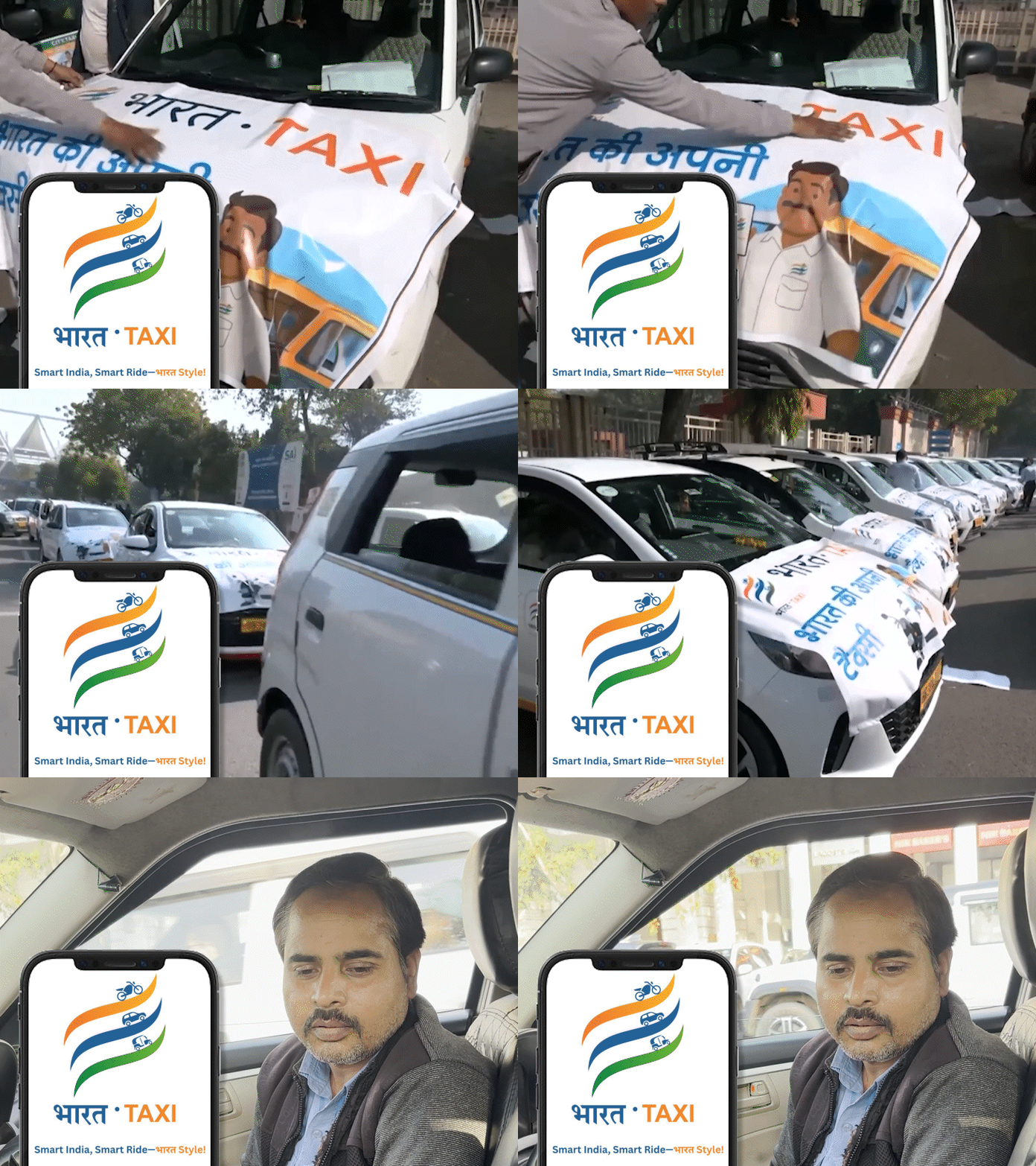
However, Ashu says that currently he is getting only 3–4 rides through Bharat Taxi, whereas bookings from other companies come throughout the day. “When more people get to know about it, we will also benefit from it. They should promote it by printing ads on vehicles and autos.”
Expert: Government should fix fares like pre-paid taxis
Sheikh Salauddin, National General Secretary of the Indian Federation of App-Based Transport Workers (IFAT), calls Bharat Taxi a good initiative, though he has some concerns. Salauddin says, “The biggest challenge is the fare. The government should fix one fare for everyone, including private cab companies and Bharat Taxi. The fare should neither be too low nor too high.”
“The government should have a meeting with all organisations. After this, rates should be fixed according to respective states. Only then can a model like Bharat Taxi be successful. Just like the government fixes pre-paid taxi fares in big cities, a similar system should be established.”
On the challenges of Bharat Taxi, Salauddin says that platform companies, or private cab companies, have more money, but when drivers have made those companies big, why can they not make Bharat Taxi big?

Promotion needed to shift customers from big companies
Basudev Barman, who researches the transport sector, also supports Salauddin’s statements. He says that it will be a big challenge to shift the existing customer base of large companies.
Barman says, “Now we are finding out that Bharat Taxi’s fare is slightly higher compared to other companies. Because of this, building trust and creating customers is a challenge. The government will have to take the initiative to build driver and customer trust in this. This market needs to be regulated. Until cabs run on a fixed fare, private companies will continue to act arbitrarily.”
Speaking about changes in the cab market, Barman says, “Private cab companies have already changed their strategy. Now they have moved to a subscription model instead of commission. Most drivers are no longer paying commission on every ride. Companies are giving drivers subscriptions for a fixed period.”
“In comparison, the government will need to come forward to promote India Taxi because it has the resources. Only through this can India Taxi expand. Drivers cannot do this work themselves.”

Basudeb Barman believes that awareness about Bharat Taxi needs to be brought among people through advertising, messages and social media.
₹2 lakh crore taxi market in the country
It is true that cab companies initially operated only on a commission model. Companies used to take 15–30% commission on every ride fare. However, now all companies are working on a subscription model. This means that after paying a fixed subscription amount on a monthly, weekly or daily basis, drivers can keep the entire fare for each ride.
For example, Uber is charging ₹129 for a one-day subscription. After this, the cab driver does not have to pay any commission on the whole day’s earnings. Similarly, Ola has a one-day subscription for ₹149. After this recharge, the day’s fare goes to the driver. Other companies are also adopting the same model.
According to a report by market research company Mordor Intelligence, India’s total taxi market in January 2026 is worth more than ₹2 lakh crore. App-based cab companies have a 65% share in this, which is approximately ₹1.31 lakh crore. Within this, Uber, Ola and Rapido have the largest market share. The app-based ride market is expected to grow even further in the coming years.

Bharat Taxi CEO says – rates will always be consistent
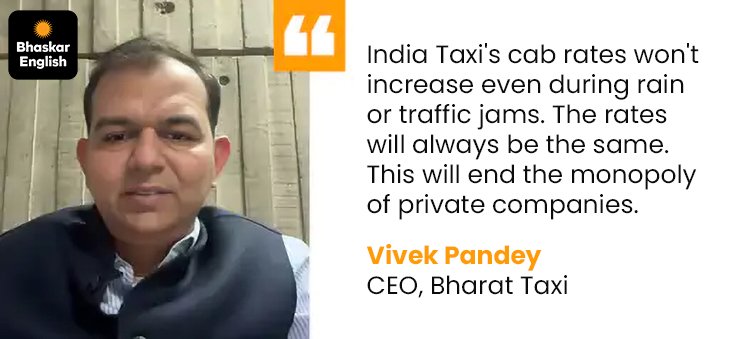
Bharat Taxi’s Chief Executive Officer (CEO), Vivek Pandey, says that more than 4 lakh drivers have already joined through the app. Meanwhile, about 13 lakh customers have signed up. Around 2–3 lakh people are searching daily on the Bharat Taxi app.
Speaking about the benefits for drivers, Vivek says, “All drivers will gradually be brought under social security schemes such as Ayushman Yojana and Mudra Yojana. They will get all these benefits in addition to zero commission. No one’s ID will ever be blocked; they will be heard because drivers are also on the board.”
“The other side is that of the customer. They will get cabs at the right rate. It will not happen that rates are reduced today to attract customers and then increased later.”
Trying to get customers by maintaining balanced rates
Regarding market competition, Vivek says, “Right now, we are requesting drivers not to worry about rates because we need to bring in customers. If we increase rates too much, customers will not come. That is why we are not claiming anywhere that Bharat Taxi is the cheapest.”
“We are trying to maintain a balanced price. We also appeal to customers to use this service, as the money is not going to any company or foreign country. Big companies cannot take bookings with unlimited discounts; that will not sustain their business either.”
“Within a year, Bharat Taxi will be available in major cities, and within three years this service will start across the country.” On drivers becoming ‘owners’, he says, “Any driver can buy up to five shares worth a maximum of ₹500 each. If the company makes a profit tomorrow, drivers will also have a share in it. Also, very little money will need to be paid for insurance.”
Regarding women drivers, Vivek says that work is currently being done on this. When there are multiple women drivers together, this option will also be opened. If it is opened now and customers do not get drivers, there will be problems. On the demand for uniform rates for all, Vivek says that transport is a state government subject. If the government fixes fares, then Bharat Taxi will definitely follow them.