








Source: ET
Subject: Government Schemes
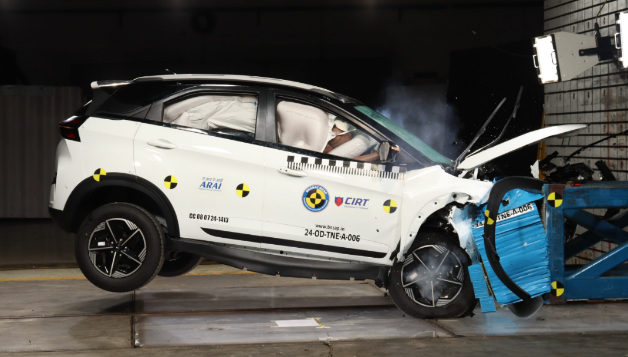
Context: Bharat NCAP 2.0 draft has been released by the Ministry of Road Transport & Highways (MoRTH), expanding India’s crash-safety rating system with new test categories and higher safety benchmarks.

About Draft Bharat NCAP 2.0:
What it is?
- A revised vehicle safety rating programme that evaluates crashworthiness and safety technologies of cars sold in India. It updates the 2023 Bharat NCAP guidelines and introduces new crash tests and assessment verticals.
Launched by: the Ministry of Road Transport and Highways (MoRTH).
- Testing and certification are handled by the Central Institute of Road Transport (CIRT), Pune.
Aim:
- To upgrade India’s vehicle safety framework to global standards.
- To protect not just occupants but also pedestrians and vulnerable road users.
- To encourage manufacturers to adopt advanced safety technologies.
Key Features of Bharat NCAP 2.0:
- Five Assessment Verticals: Safe Driving, Accident Avoidance, Crash Protection, Vulnerable Road User Protection (new), Post-Crash Safety (new)
- Expanded Crash Tests: Frontal impact, side impact, oblique pole test, full-width frontal test (new), rear impact test (new).
- Injury Evaluation: Uses advanced test dummies (ATDs) to measure injury levels in different crash scenarios.
- Vulnerable Road User Safety: Includes pedestrian legform tests, adult/child head impact tests; optional checks for autonomous braking in pedestrian and motorcyclist situations.
- Accident-Avoidance Tech: Mandatory Electronic Stability Control (ESC); optional Autonomous Emergency Braking (AEBS) earns extra points.
- Post-Crash Safety: Checks for fire/electrical safety and ease of occupant escape (doors and seat-belt buckles).
- Revised Star Ratings: Higher point thresholds; no 5-star rating if any category scores zero or shows severe injury risk
Significance:
- Brings India closer to global NCAP standards.
- Improves protection for pedestrians, who form over 20% of road-accident deaths.
- Boosts India’s aim of reducing road fatalities by 50% by 2030.