






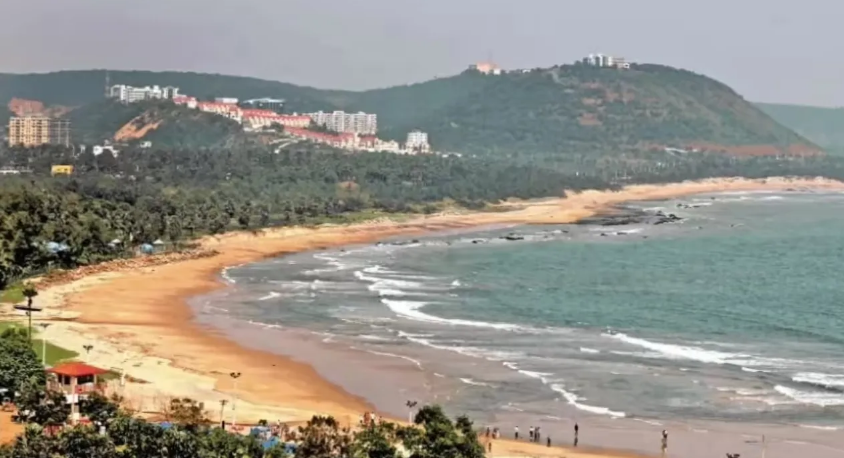
Andhra Pradesh’s extensive coastline, stretching 974 kilometres from Srikakulam to Nellore, has emerged as a major hub of rare and valuable minerals, according to official and geological assessments. Authorities have identified significant deposits of monazite in beach sands across the coastal belt, along with other high-value minerals such as ilmenite, rutile, zircon, garnet and sillimanite. These resources are expected to play a critical role in strengthening India’s defence, semiconductor and clean energy sectors.
Officials said the monazite found along the coast contains 55–60 per cent rare earth elements, along with 8–10 per cent thorium, making it one of the most strategically important minerals. Experts believe these elements will be vital for next-generation nuclear reactors and advanced technologies. Light rare earth elements such as lanthanum, cerium, neodymium, praseodymium, samarium, europium and gadolinium, present in monazite, are widely used in electric vehicles, wind turbines, missile guidance systems, satellites, fibre optics, superconductors and modern medical equipment.
Geological surveys have revealed that this mineral-rich belt extends across several coastal locations, including Bheemunipatnam, Kalingapatnam, Kakinada, Narsapur, Machilipatnam, Chirala, Vodarevu, Ramayapatnam and Dugarajapatnam. Estimates by the Atomic Minerals Directorate and Indian Rare Earths Limited (IREL) indicate that India has 12–15 million tonnes of monazite and over 300 million tonnes of associated beach sand minerals. Andhra Pradesh alone is believed to account for nearly 30–35 per cent of the country’s monazite reserves, estimated at around 3.7 million tonnes.
Recognising the strategic importance of these resources, the Andhra Pradesh Mineral Development Corporation (APMDC) has initiated steps to mine the rare minerals. The central government has granted leases covering about 16,000 hectares for beach sand mining. While private companies are permitted to extract minerals such as ilmenite and zircon, monazite extraction and processing will be handled exclusively by the public sector Indian Rare Earths Limited. IREL is setting up a monazite processing plant at Gudur in Nellore district with an annual capacity of 10,000 tonnes, which is expected to be commissioned in 2026.
Currently, China controls nearly 85 per cent of the global rare earth supply. Experts say the Andhra Pradesh discoveries could significantly reduce India’s dependence on China and other foreign suppliers. The development is expected to support India’s clean energy transition and strengthen national security, positioning the country more strongly in the global strategic minerals landscape.